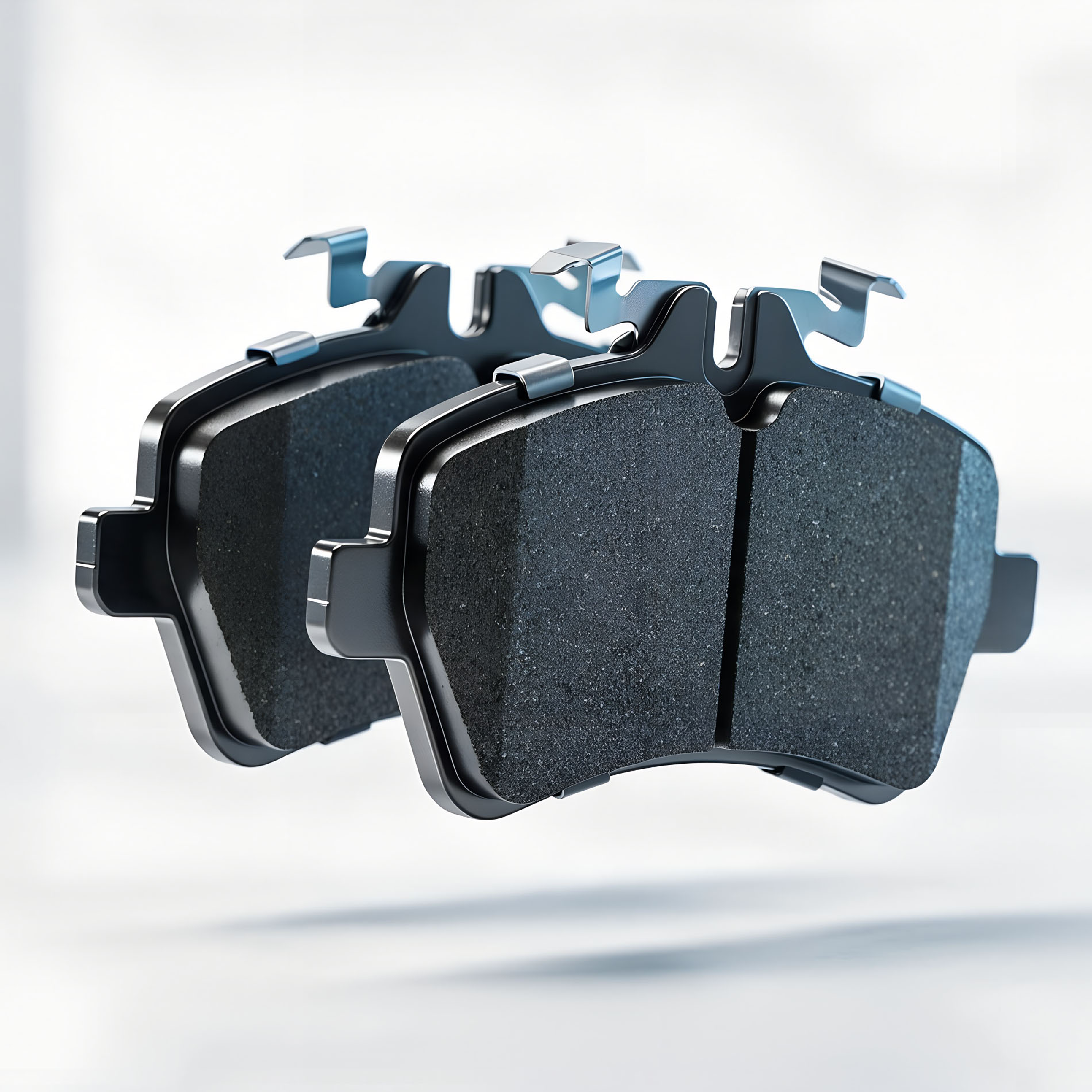
For decades, environmental regulations have focused almost exclusively on emissions from the engine and exhaust. With Euro 7, the paradigm shifts radically. For the first time, the European Union introduces specific limits on so-called “non-exhaust” emissions, those generated by the wear and tear of components such as tires and braking systems.
This breakthrough is destined to profoundly alter the very role of the brake, which goes from being a simple safety device to also becoming an environmental component. For manufacturers, suppliers, workshops, and the aftermarket, a new technological phase is dawning, involving materials, design, maintenance, and electronic braking management.
Euro 7 looks beyond the exhaust pipe
In recent years, the automotive industry has invested heavily in reducing engine emissions.
Electrification, hybrid systems and the evolution of internal combustion engines have made it possible to significantly reduce exhaust pollutants.
At the same time, however, European studies have highlighted an increasingly significant phenomenon: a growing share of the particulate matter present in urban areas comes from sources other than the engine.
Among these, the braking system represents one of the main sources.
How brake dust is formed
During each braking, an inevitable friction is generated between:
- disc brake;
- tablet;
- friction materials.
This contact produces microscopic particles consisting of:
- metal;
- abrasive materials;
- residues of braking compounds;
- fine particulate matter.
The particles are dispersed into the environment, contributing to urban air pollution.
This is a phenomenon that affects all types of vehicles.
Even electric cars produce braking emissions
Contrary to what many people imagine, electric cars do not completely eliminate this problem.
Indeed, in some cases the increased weight due to the batteries can increase the stress on the braking system.
Although regenerative braking significantly reduces the use of traditional brakes, wear emissions still occur.
It is precisely for this reason that the Euro 7 regulation affects both internal combustion and electric vehicles.
The new limits set by Euro 7
The new regulation introduces for the first time measurable and verifiable values for the dust generated during braking.
For most vehicles the limit will be set at:
7 mg/km
For electric cars, starting in 2035, the value will drop further to:
3 mg/km
Numbers that will force the entire automotive industry to profoundly rethink the design of braking systems.
New brake pads to reduce particulate matter
One of the main areas of development concerns tablets.
Future compounds will have to simultaneously guarantee:
- high braking performance;
- less abrasion;
- reduced dust generation;
- high temperature stability;
- long duration.
Manufacturers are already working on innovative materials that are free of heavy metals and characterized by lower particle dispersion into the environment.
Technical evolution also for brake discs
It won’t just be the pads that will change.
Brake discs are also going through a phase of profound innovation.
Among the most promising technologies we find:
- carbide coatings;
- anti-wear surface treatments;
- advanced composite materials;
- high-strength solutions.
The aim is to limit the deterioration of braking surfaces and reduce the release of particulate matter without compromising safety.
Regenerative braking will become increasingly important
In electric and hybrid cars, regenerative braking will play a decisive role.
This system uses the electric motor to slow the vehicle and recover energy, limiting the intervention of the mechanical brakes.
The advantages are many:
- less wear on components;
- reduction of braking emissions;
- energy recovery;
- greater overall efficiency.
For this reason, manufacturers are developing increasingly sophisticated software to better integrate regenerative braking and traditional braking.
Euro 7 will also change the work of workshops
The implications of the regulation will not only concern vehicle design.
The repair sector will also have to face significant technical evolution.
The workshops will be operating on:
- new friction materials;
- high-tech discs;
- braking systems integrated with electronics;
- braking management software;
- increasingly complex electric and hybrid vehicles.
Brake replacement becomes more technological
Operations that appear relatively simple today may require more advanced procedures.
The replacement of:
- tablets;
- discs;
- sensors;
- electronic actuators;
must take into account compatibility with:
- ADAS system;
- control units;
- regenerative braking;
- vehicle management software.
Technical training for repairers will therefore become even more important.
The “low emission” aftermarket is growing
The new regulation will also open up significant opportunities for the independent market.
In fact, a strong growth in demand is expected for:
- pastiglie low emission;
- coated discs;
- Euro 7 compliant braking kits;
- certified aftermarket components.
Manufacturers who succeed in developing solutions compliant with the new standards will benefit from a significant competitive advantage.
The brake of the future will also be an environmental component
The real innovation introduced by Euro 7 is cultural even before it is technical.
For the first time, the braking system is not evaluated exclusively on the basis of:
- safety;
- performance;
- comfort.
But also for its environmental impact.
The brake of the future will have to be:
- Safe;
- efficient;
- silent;
- durable;
- compatible with electronics;
- low particulate emissions.
A challenge for the entire automotive supply chain
The reduction of braking emissions will involve the entire supply chain:
- builders;
- component manufacturers;
- chemical companies;
- aftermarket;
- workshops;
- service centers.
Sustainable mobility will no longer depend solely on what comes out of the exhaust pipe, but also on all the particles that each vehicle generates during its daily use.
This is why Euro 7 represents one of the most profound transformations of the braking system in recent decades.